

Pay attention.
My weekly roundup of what’s in the zeitgeist.

Why isn’t there an English word for zeitgeist? I suppose it is far better than whatever we could have come up with so we didn’t bother. I do love the appropriative, mongrel nature of the English language…there is no culture that we’re too good to borrow or steal from.
Speaking of the British Museum, The Bayeux Tapestry is returning to England for the first time in 1000 years! Sacrebleu! More on why you should care about this below — but tickets are on sale July 1 and the exhibit runs from September 10–July 11 next year.
Anyway welcome to a new weekly edition of Marque.
I had the thought recently: why does everything I do need to be this intensive, overwrought, overthought, marathon long-form effort? A question my therapist could absolutely answer, I’m sure.
Does the world really need another roundup/digest-style newsletter? Maybe actually, yes. According to very smart people, the influential brands (personal or business) of the future, and the ones winning this game already, are the people who can most discerningly filter the internet for those too busy and overwhelmed to do so themselves.
The people who can be trusted as much for what they leave out of their recommendations, as what they leave in. Not curation — filtration.
You may or may not know me well (yet), but I promise to filter the hell out of the world for you.
In this issue:
Enjoy!
THE REFRAME
“The internet’s problem has moved from access to trust.”

The Costco theory of the internet is simple. People are tired of sorting. Tired of comparison, fake reviews, infinite tabs, marketplaces that play like casinos, creators who recommend everything, software that needs a consultant to explain its pricing page, experts with hidden incentives, brands that treat their attention as something to strip-mine.
Most of the time they’d take a safer set of things over the theoretically best one. They want fewer decisions and a higher floor. They want someone with the reputation and buying power to bin the obvious garbage before they walk in. They want the kind of constraint that protects them.

Underneath the newsletters and the affiliate links sits the exact same skill, just wearing two different outfits — having a point of view, and being willing to put your name on it.
The internet spent twenty years giving everyone a platform. The next decade might belong to the people who can earn trust on it.
FIELD NOTES
The Economics of Ice-Cream Convenience
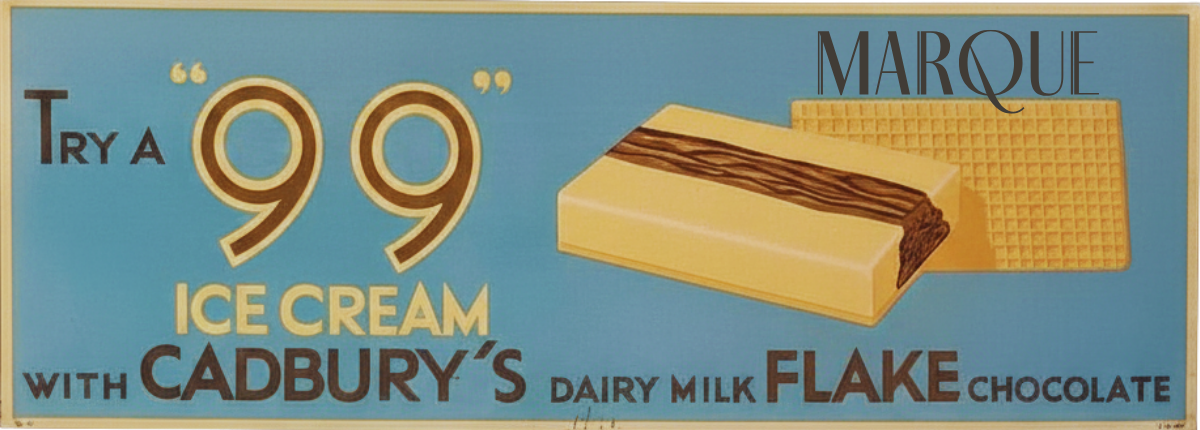
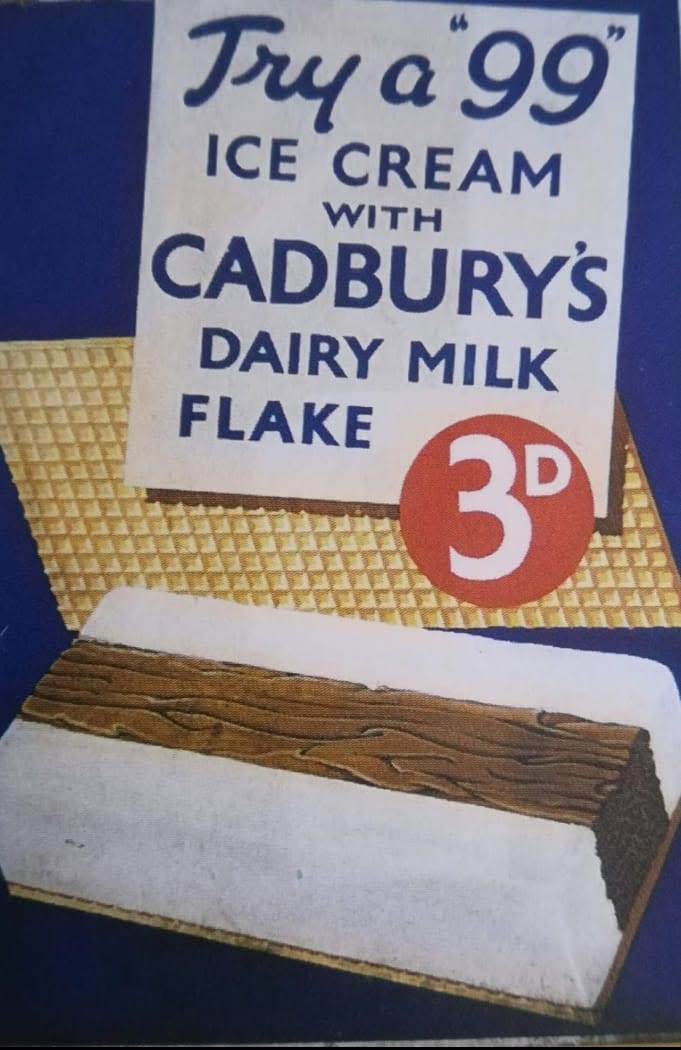
Allow me to tell you a complete farce in just a dozen words: last week I paid £3 for a single Cadbury 99 Flake ice-cream cone.
Contrary to popular belief, the 99 Flake is not so-called because it used to cost 99p (in the 1930s it cost 3d — threepence), but that doesn’t stop you thinking that’s what it should cost.
A 4 pack of these is £5.75 at Tesco currently so Mondelēz/Nestlé really are laughing all the way from the impulse freezer to the bank (TIL that is the actual industry term for those storefront chest freezers).
Anyway this lead to me going down a rabbit hole on the economics of single-serve ice-cream and more broadly, the economics of convenience in general. Because anything that can be sold with a 50-60% margin needs to be studied.
More to come on this.
THE FORUM
“We are living in the ruins of a far greater civilisation.”
I’m not sure what decisions I’ve made to convince my insta algorithm that I might want to see vintage appliance renovations but I’m glad I did.
In case you needed any further proof to disabuse yourself of the hilarious notion that technology innovation only runs in one direction, feast your eyes on the ingenuity of 1960s refrigerator design and engineering.
It has a temperature controlled butter unit. A TEMPERATURE CONTROLLED BUTTER UNIT.
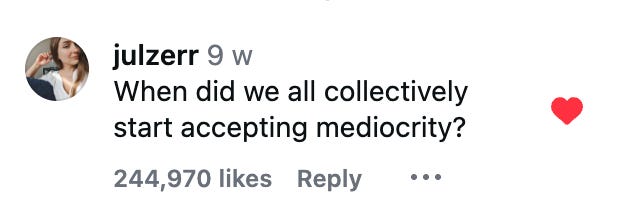
This comment really sums it up:
There is obviously a point to be made here about capitalism, planned obsolescence and the world we now find ourselves in thanks to continuous optimisation around profit.
There is also a point to be made about how brand marketing is the mechanism for enforcing the lie that new is always better.
When did we all collectively start accepting mediocrity-by-design? At some point between now and 1960, when we traded affordability for quality without ever knowing that was the deal we were agreeing to, without realising this was the binary we were being forced into, and that we now find ourselves trapped in.
WORK IN PROGRESS
“You’re so English you’re practically French”.
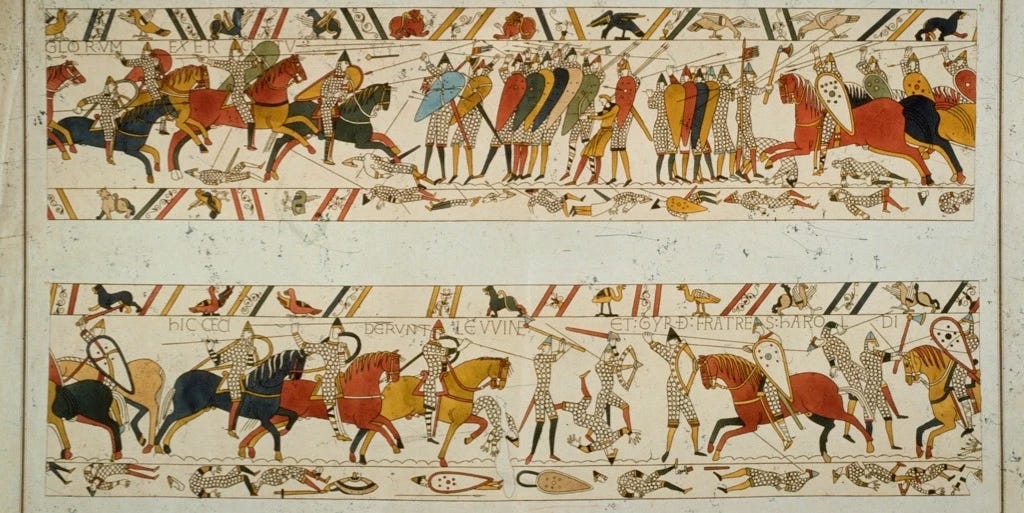
The Bayeux tapestry depicts the events leading up to the Battle of Hastings and the Norman Conquest of England in 1066.
It was last time England was successfully invaded, and it is the year from which the modern monarchy dates itself. Coincidentally, I recently referenced it in my previous essay on the origins of the word ‘Marque’.
The annihilation of the Anglo-Saxon ruling class and their wholesale replacement with the Norman French made Franco-European culture and politics the prevailing paradigm here for hundreds of years—even until today. But the schism between the Norman elite and the Old English peasantry has persisted for centuries.
It’s still visible today. In English vocabulary. Geography. Architecture. The Church. Land ownership. Socio-economics. The surnames and even the very DNA of the people.
1066 was just one chapter on the long arc toward union and the modern British state. As we approach the end of a millennium since the Norman Conquest, it feels like a good time to reflect on the “United” Kingdom as it is today.
What I’m interested in is the gap between state and identity. What exactly does it mean to be ‘British’ right now? A cursory glance at the news media on any given day of the week would tell you there’s not a lot of consensus.
This is what I’m going to be investigating in a new research project: A Very British Brand Problem. If you have strong opinions about this subject, I’d very much like to hear them…
(The quote above is from Billy Connolly btw)